
When news broke today that the women’s Test between England and India would be played on a used pitch at Bristol, advocates for and fans of the women’s game were rightly angry.
When there are so few women’s Tests - this will be the first year with more than one women’s Test since 2014, and the first that wasn’t an Ashes Test - the burden on each one to entertain is disproportionately and unfairly high. Test cricket’s hard enough when you’re just playing for your team, let alone your entire sex.
And as though that weren’t enough of a barrier to players playing with freedom, the last few have been played on slow, dead pitches. Ask anyone who was at Taunton in 2019 or Canterbury in 2015 and they’ll tell you for the type of cricket that made for. The Bristol pitch may only have been used for a (men’s) T20 a week ago, and it may turn out fine, but the idea of any men’s Test pitch anywhere not being top of the priority queue is ludicrous.
But the idea of India’s women having to settle for second best is all too familiar.
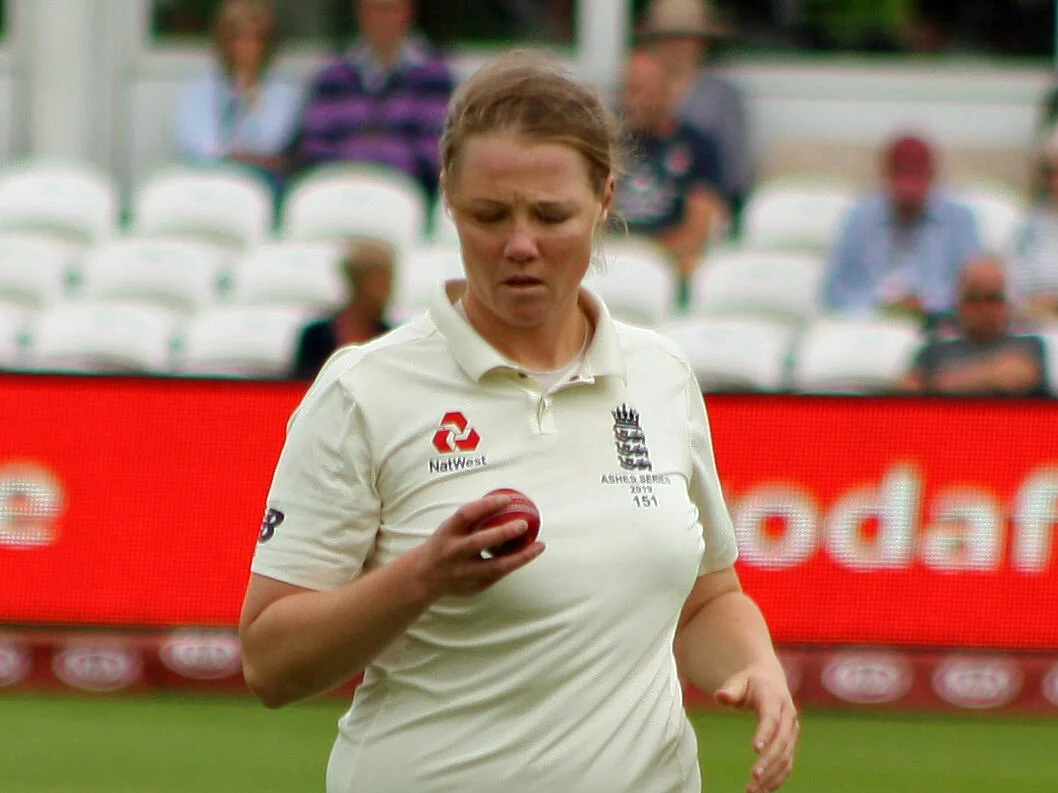
Why are we talking India when this particular pitch debacle is largely the ECB’s doing? Because, even though it failed, England captain’s Heather Knight’s request for a fresh pitch shows a level of autonomy and empowerment that is inconceivable in the Indian women’s game.
To set the scene, Cricbuzz’s Bharat Sundaresan draws on a Sicilian analogy: “I guess it’s endemic of the relationship between players, male and female, and the BCCI.
“They live by this omertà code wherein you’ll rarely see a current or for that matter a former cricketer say anything even semi-critical about the functioning of the board. They seem to live in this constant fear of rubbing someone the wrong way, or that’s the common perception.”
Ananya Upendran, managing editor of Women’s CricZone, goes further: ”The general theory is that if you want to survive in the system, you must either make yourself invisible or dance to the tunes of those in power. After all, we must be 'grateful' that there is a women's team at all.”
Domestic cricketers speak of that expectation of gratitude from administrators whenever they advocate for…well, anything. And thus, we arrive at a situation where a team that’s reached two of the last three global tournament finals only gets paid when the board feel pressure from an English broadsheet newspaper.
Sundaresan adds: “The women coming out and defending the BCCI is akin to what the men have been doing for years now. But it’s disappointing to see that these days players don’t just avoid talking about these things but end up defending the BCCI very vocally.”
Whether it’s opener Smriti Mandhana on equal pay - “We need to understand that the revenue we get is through men’s cricket” - or fast bowling legend Julhan Goswami on the Women’s not-an-IPL clashing with the Women’s Big Bash - “If you don't like the timing, it is okay, but you cannot question BCCI's decision” - India’s leading players do not feel able or willing to advocate for the growth of the women’s game.
The contrast with Heather Knight holding back her frustration at being denied her request a better pitch is stark enough. The contrast with Australia’s entire playing staff almost going on strike to ensure a new pay deal extended to women’s international and domestic cricketers is a yawning chasm.
Raf Nicholson, historian of the women’s game and editor of CricketHer, has a very simple explanation when asked why Indian women’s cricketers do not advocate for themselves: “For the same reason anyone defends their employer in public - they are worried about getting fired, reliant on their BCCI-issued central contracts to survive, and there is no Players’ Association in India, so no trade union.”
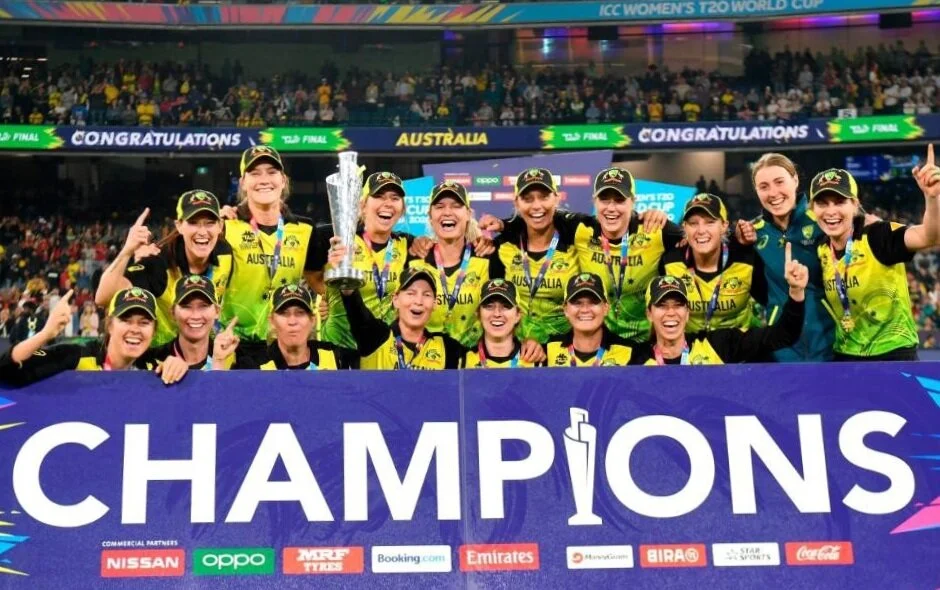
Australia won handsomely that incredible night in Melbourne - but that India had got there at all was remarkable. Image: AFP
I wrote last March in the wake of 86,000 packing the Melbourne Cricket Ground for a women’s World Cup final about the acute need for India to have a players’ union if it wished to do more than rely on sheer numbers to bring about a world-beating women’s team.
Upendran, Sundaresan and Nicholson all independently point out that the BCCI board is not just all male but has nobody on it with a proven track record of interest or expertise in the women’s game. Many have links to power, with the influence of both former board president N Srinivasan and current Indian Home Minister Amit Shah (chief lieutenant of Prime Minister Narendra Modi) evident.
“The BCCI's belief is very much that in order for India to prove themselves worth of more investment and access to better resources, they need to win World Cups,” says Nicholson.
“Of course, this is a totally spurious circular argument because it is very difficult to win tournaments if you don't have proper investment, but it is nonetheless a very widely-held belief.”
Sundaresan elaborates: “It still feels like the board is going through the motions when it comes to promoting and funding women’s cricket. There is clearly no long-term planning for where they want this team to be headed in the next few years.
”I think what the Indian women have done already by reaching two of the last three ICC tournament finals is itself a remarkable achievement.”
There is no Zonal Academy-National Academy-U19-A Team-senior level pathway here, no gently purring conveyor-belt of well-prepared cricketers. Serendipity has been allowed to overtake structure.
Upendran, who knows of what she speaks having played for a decade in the Indian domestic system, draws on recent history: “Shafali Verma, Jemimah Rodrigues, Radha Yadav, Deepti Sharma, and even Mandhana: we found those players by accident.
”So, if we are able to find so many potential world beaters without lifting a finger, I'm sure there is an expectation/hope at board level that that will keep happening. It means less work for everyone.”
The BCCI seem to reason that in a country of 1.4 billion people, 15 or so good women’s cricketers will turn up somewhere. In fact, many in the domestic system report that the numbers are used as a threat to keep players in line - keep quiet or we’ll get someone who will - and that this threat is so effective nobody has to even bother making it explicitly.
Remember, this is a country where the board produces the TV broadcasts and contracts the commentators directly, and which renames stadiums after sitting Prime Ministers on the morning of a Test match. The Overton Window (nothing to do with Craig or Jamie) is in a very different place.
The BCCI’s power, and willingness to use it, is well-documented. To pick the greatest hits, they tried to bring down the first T20 World Cup before it happened and have forced de-facto schedule rigging upon the ICC through their refusal to play Pakistan outside of global tournaments.
It is thus instructive to see when they choose to do nothing. And that’s exactly what they have done on the issue of the used Bristol pitch. No persuasive phone calls, no leveraging of Indian stars in the Hundred, no gentle reminder of India’s mass TV audience wanting a more entertaining game - no, once again, the women have been thrown into a series in unhelpful circumstances and told to get on with it.
It didn’t work earlier this year in South Africa, so much so the coach got sacked. Whether it works in England is almost immaterial. “If India puts a solid system in place, the sky really is the limit,” concludes Upendran to try and inject some optimism, but the corollary of that is that as long as there isn’t, any success will continue to be in spite of the system, not because of it.